A Letter from a Possible Future Self
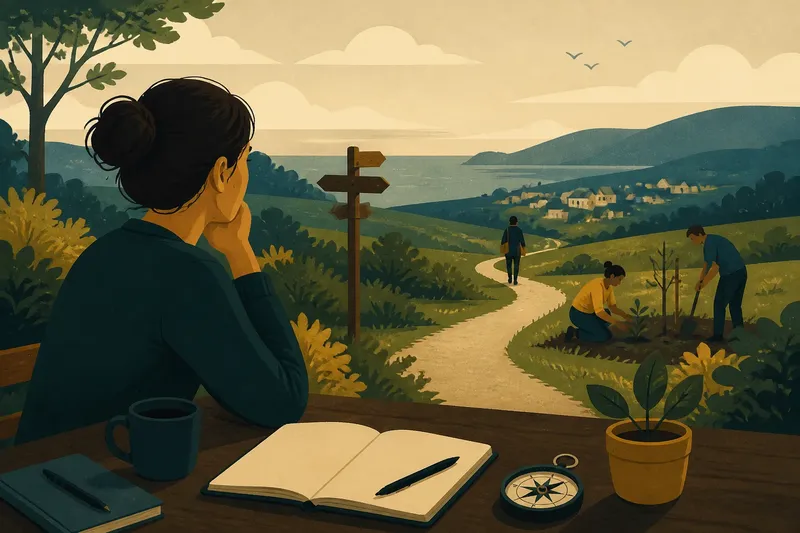
A letter from a possible future self turns an imagined ordinary day into a vivid picture of what you want life to feel like, without demanding a fixed plan.
What would you want an ordinary day in your future to feel like? A letter from a possible future self can help you picture that day without turning it into a plan you must follow. Write a scene that feels recognisably yours, then use its details to imagine a life with more room for what you enjoy.
Choose a time and voice
Take a notebook or open a blank document. Choose a future moment that feels imaginable, but leave its date and circumstances loose. You are writing fiction about one possible version of your life, not making a prediction.
Decide who is speaking. You might write to your present self, or write as the future self describing the day. Either way, leave room for uncertainty and for other people’s needs. If the scene starts to feel like a performance, ask what you would enjoy on a plain Tuesday when nobody else is watching.
Build a daily scene
Begin with an ordinary day rather than a milestone. A promotion or a move can dominate the picture; everyday details show what it might be like to live there. Follow the day from waking to evening, and include a few concrete anchors: a place, a routine, a task and an encounter.
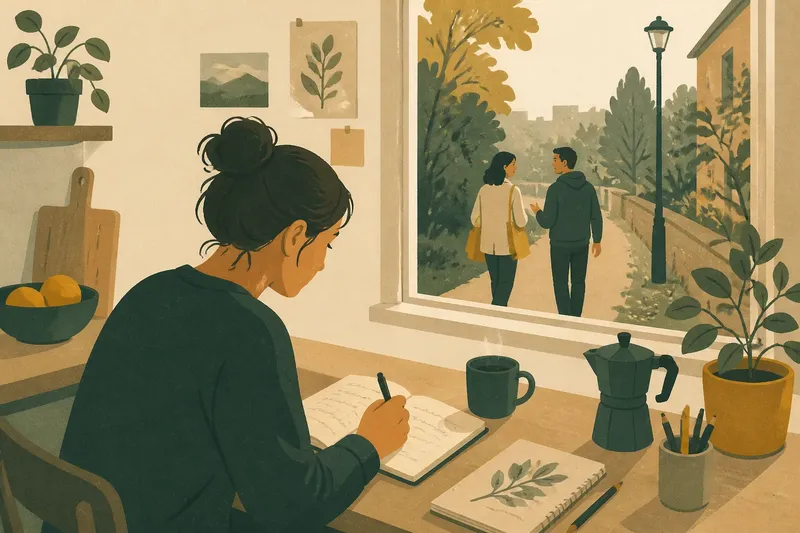
Say you enjoy drawing and miss seeing your friends. You write about sketching at the kitchen table before work, then meeting a friend for a walk. The resulting scene gives you something specific to imagine: creative time in a familiar place, followed by easy company. It does not predict that those events will happen.
Use these prompts if the page feels blank:
- Where do you wake, and what do you notice first?
- What holds your attention during the day?
- Where do you get to choose your pace or focus?
- Who do you see, help, learn from or spend time beside?
- What do you make, maintain, explore or contribute?
- What is the evening like as the day winds down?
You can include friction: a missed bus, a difficult conversation or a task left unfinished. A day does not need to be effortless to be appealing. Notice what makes its hard parts feel manageable, or what you would want to keep even when plans change.
Notice what appeals
Read your scene and mark the details you are drawn to. A quiet breakfast might feel restful; practising a skill might feel absorbing; cooking with someone might make the evening warmer. Treat these as clues to what you enjoy, not fixed labels for your personality.
Ask what makes each detail appealing. Perhaps a walk gives you time outdoors, or solving a problem with a colleague makes work more interesting. The same scene can hold several sources of enjoyment. Write a few notes beside the page in plain language, such as “time to make things” or “company without a rush”.
Look again for details that seem appealing mainly because they might impress someone. A grand setting or a busy calendar may be part of your scene, but you do not have to keep them. Ask what the day would feel like if nobody saw it. If the detail still attracts you, leave it in; if not, change it.
Questions about the letter?
What if I cannot imagine the future?
Write about one day you would like to experience rather than trying to picture your whole life. You can also begin with a recent moment you enjoyed and describe what made it pleasant.
Should I include work or relationships?
Include whichever parts of daily life matter to you, from care and rest to work, community, creativity or practical responsibilities. The scene can hold several parts at once.
What if the scene feels unrealistic?
Keep the details you enjoy and let the setting remain flexible. If one particular job or place feels out of reach, the scene can still capture the kind of activity or company you would like more of.
When should I read the letter again?
Return to it when you feel curious, or when your circumstances have changed enough to make the scene feel different. You can keep, edit or discard any detail that no longer appeals.
Leave room to revise
Keep the letter somewhere you can find it, but treat it like a sketch in pencil rather than a route printed on a ticket. The picture may change as your tastes, relationships and circumstances shift. You can revise the setting while keeping a detail that still feels inviting.
If the future on the page feels distant, let it remain an imagined scene rather than a demand. A letter from a possible future self is useful when it makes an appealing day easier to picture. You can return to that picture for enjoyment, or let it spark a fresh scene when your imagination takes you somewhere else.