Practice Alone or Learn with Others? Choose the Right Setting
Practice alone or learn with others? Match the setting to your skill, feedback needs and comfort so each session gives you a clearer way to improve.
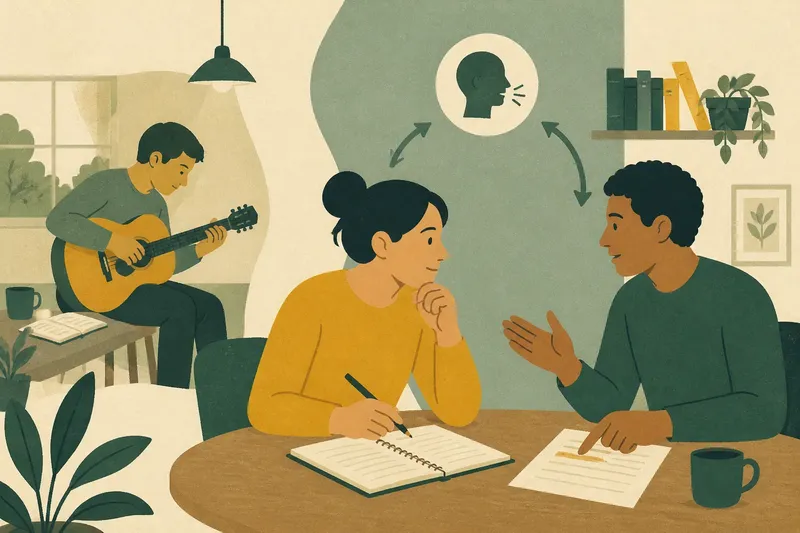
Practice alone or learn with others? The answer depends on what your skill needs today: quiet repetition, an outside perspective or a chance to respond in real time. A guitarist working through a tricky passage may need silence first, then another musician’s ear; someone learning conversation may need a partner from the start.
Neither setting is automatically better. Think of them as different tools on a workbench: choose the one that fits the task, then change tools when the task changes.
Attention and feedback
Solo practice gives you room to repeat a movement, pause and adjust at your own pace. It suits work where you need to notice fine details, such as the pressure of a pencil on paper, the shape of a sentence or the timing of a stretch. Without an audience, you can also try an awkward approach without explaining yourself.
Learning with others brings in perspectives you cannot supply on your own. A teacher may spot a tense wrist; a peer may offer a different way through a problem. Shared work is essential when the skill itself involves listening, explaining or adapting to another person.
Feedback helps when it points towards a clear next move. Before asking for it, name the question: “Which part of this explanation is unclear?” is more useful than “What do you think?” A focused request helps the other person respond to your goal, rather than to a different one.
Working alone has its own feedback challenge: a blind spot can go unnoticed. Compare an early draft with a later one, or record a practice passage and listen for the part you meant to improve. These checks will not replace another person’s perspective, but they can help you decide what to ask about next.
Effort and comfort
Private practice can make it easier to repeat an awkward passage or admit you have lost the thread. That space can help when you are new to a skill or feel self-conscious about making mistakes.
A group asks for a different kind of effort. You might need to ask a question, share unfinished work or listen while someone else struggles. These moments build capacities that private repetition cannot: receiving correction, taking turns and responding without taking over.
Other people can also make it easier to begin, especially if you have arranged to practise with a language partner or attend a class. But if you find yourself hiding confusion to seem capable, the group may be too large, competitive or fast-paced. Try a one-to-one session or a smaller circle rather than treating discomfort as a verdict on your ability.
Choose for the task
Choose solo practice when the work calls for concentration, repetition or personal experimentation. Choose shared learning when you need another person’s response or a chance to practise in a social setting. If the task needs both, give each setting a distinct job.
Say you are learning to explain a complicated idea clearly. You write a short explanation alone and mark the sentence that feels vague. Then you ask a trusted colleague, “Which point would you want me to clarify?” They identify the middle section. You revise it, explain the idea aloud again and check whether your wording is more direct. The solo draft gives you something to work on; the listener reveals where it loses them.
Starting with company can also make sense. A beginner may need a teacher to show a safe, sound approach before practising alone. Someone with more experience may work independently first, then seek an outside view when a familiar routine stops revealing anything useful.
How should you choose?
When does solo practice fit best?
Choose it when you need repetition, concentration or room to experiment without an audience. Set a clear focus, such as practising one passage or revising one paragraph, so repetition stays attentive rather than automatic.
When does learning with others help?
Choose a partner, teacher or group when the skill depends on response, interpretation or another person’s perspective. Conversation, collaborative problem-solving and public speaking all involve conditions that private rehearsal can only partly recreate.
What if a group feels awkward?
Try a one-to-one lesson, a small circle or a format where people take turns. Arriving with one specific question can also give you a natural way into the activity without needing to appear certain.
How can you tell the format is working?
Notice whether you can name what you are practising, identify a useful correction and return to the task with greater clarity. If sessions repeatedly leave you confused or unable to try anything between meetings, change the structure, the group or the focus.
Switch when needed
Consider changing settings when your current one no longer supplies what the work needs: more privacy, a specific correction, a fresh perspective or another person’s response. A session does not have to stay private or shared from beginning to end; the two modes can take turns.
After each session, jot down what you noticed and what you want to try next. If you keep needing more correction, protect time for a teacher or peer; if outside opinions drown out your own judgement, return to a quiet session. Practice alone or learn with others is a choice you can revisit as the skill develops. Pay attention to what the task is asking of you, and choose the setting that makes that work possible.